
Are Children Receiving Too many Vaccines?
Molly Cavanaugh, September 2025
From the time of my birth in 2000 to when I turned 18, I received 55 different shots to prevent 16 different diseases. Diptheria, tetanus, whooping cough, Haemophilus influenzae type b, polio, measles, mumps, rubella, hepatitis B, hepatitis A, chicken pox, influenza, 2009 H1N1, typhoid, Pneumococcal, Meningococcal, Meningococcal B, and HPV. These vaccines, with the exceptions of typhoid and H1N1, were all the normal, recommended vaccines. Childhood vaccines in the United States are under debate with changes to recommended vaccines likely coming shortly. Are we over vaccinating our children and are these vaccines all necessary?
Let’s start with the safety of childhood vaccines as a whole. There are, as with everything, risks associated with vaccines but these are almost always mild ranging from muscle aches to low fevers (1). Vaccine studies taken over decades have shown no link between vaccines and autism or deaths in children (2, 3). The most severe risk typically associated with childhood vaccines is febrile seizures which are caused by fever (4). While febrile seizures are terrifying for parents, studies have shown that this side effect very rarely results in any permanent damage (5). Additionally, the CDC estimates less than 30 febrile seizures in 100,000 children vaccinated which is far lower than the 5% of all children who will experience a febrile seizure during childhood (6). There will always be some people who cannot take vaccines due to factors such as age or allergies. For example, babies under a year old are in the group most likely to die from measles but are too young to get vaccinated (7). If those who can take vaccines do, we protect not only ourselves but others as well. It may be tempting to rely on herd immunity from other people vaccinating their children, but a society quickly loses herd immunity. There is nothing better than a vaccine to protect your child.

Another reason to get vaccinated is that, even if you survive these diseases, the fight may not be over. Many diseases, including the diseases our childhood vaccines prevent against, can cause life-long issues, even death, years after the infection. When my great-grandma was pregnant with my great-uncle in the late 1930s, she contracted rubella. Due to the virus, my great-uncle was born significantly mentally disabled, to the point where he could not live at home. While the virus did not kill him, it gave him a lifelong illness called congenital rubella syndrome that prevented him from living a normal life (8). Terrible complications from preventable diseases are still an ongoing issue. Subacute sclerosing panencephalitis, SSPE, is a complication of measles infections which causes damage in the brain over time, and almost always leads to death years after the initial infection. 1 in 600 babies who are infected with measles will later die of SSPE (9). Not only do these children have to go through the pain of measles, their families get to recover and believe that the children will live and thrive, only to have their child ripped away from them before the age of 10 (10). A California school-aged child died this September in 2025 from SSPE, years after they had been infected as an infant who was too young to be vaccinated against measles (11).
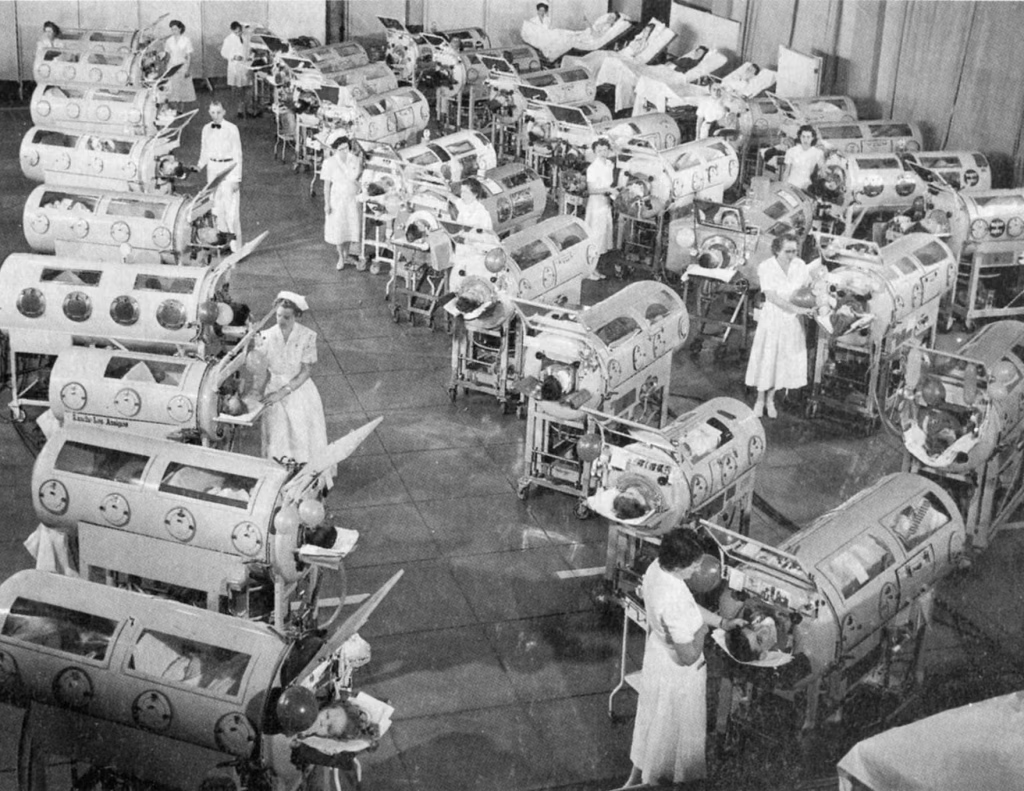
Photo Source : Million Science History Images/Alamy Stock Photo
Are all of the vaccines that we receive necessary? Diptheria, tetanus, whooping cough, Haemophilus influenzae type b, polio, measles, mumps, rubella, hepatitis B, hepatitis A, chicken pox, influenza, Pneumococcal, Meningococcal, Meningococcal B, and HPV are the vaccines typically given to children (12). Each of these vaccines are essential to saving children. Diptheria, tetanus, whooping cough are prevented through the DTaP vaccine, a series of 5 shots given from 2 months – 6 years old. Before the vaccine was available for each, diphtheria killed 5-10% of those infected, tetanus killed almost everyone infected, estimated at 1 million worldwide per year, and whooping cough killed between 100,000-200,000 Americans (13, 14, 15). Another vaccine series, the MMRV series, prevents 4 extremely contagious viruses: measles, mumps, rubella, and chicken pox. Before the vaccine was available against MMRV, measles killed 12.6% of children infected under five, mumps killed 1.4% of those infected, rubella killed hundreds of thousands of infants whose mothers contracted rubella, and chickenpox caused 10,500 to 13,500 hospitalizations per year in the US (16, 17, 18, 19, 20).

Meningococcal, pneumococcal, Meningococcal B, and Haemophilus influenzae (Hib) are bacteria that can cause severe infections, leading to life-threatening complications such as pneumonia, meningitis, and sepsis (21). These vaccines saved an estimated 1.45 million children from 2000-2015 (22). Hepatitis A and B both attack the liver which can lead to long term damage and even death (23). The virus can live outside the body for days and is spread by being in close contact with an infected person or by consuming contaminated food or water, leading to infections caused by children putting infected material in their mouth (24, 25, 26). Hepatitis A especially is often spread in daycares and school centers, making it essential to be vaccinated before the child enters school (27).

Source: Wahl, et al, 2018
Polio used to destroy millions of lives, 1 in 200 children infected with polio became permanently paralyzed, with 5-10% of those paralyzed dying. The polio vaccine has prevented over 30 million children from being paralyzed (28) . The HPV vaccine prevents cancers spread by human papillomavirus infection, stopping 37,000 cases of cancer in the US per year (29). Read more about the importance of the HPV vaccine here: HPV Vaccines: A Parent’s Guide. Each of these vaccines saves children’s lives. Together these vaccines have saved more than 150 million lives since 1974, 95% of which were children under the age of 5 (30.). None of these diseases are extinct, meaning that without proper protection, children will still die of polio, of measles, of tetanus (31, 32, 33.)

The choice to give so many childhood vaccines is not one that was made lightly. In the year 2000, nearly 25% of parents thought that children’s immune systems were being weakened by too many vaccines (34). This fear is largely based on the belief that the immune system will be overwhelmed. In response to parent’s fear, The Immunization Safety Review Committee was created in 2001 to test the efficacy and the safety of receiving childhood vaccines. This committee examined the biology behind vaccines, the epidemiology of diseases, the use of multiple vaccines at once, and the health outcomes of children (35). This study found that the immune system is capable of receiving all of these vaccinations and that they do not weaken the immune system. Additionally, infants are normally exposed to multiple viral antigens early in life, even if they do not show symptoms (36, 37, 38). I understand that this sounds like a large number of shots, but they are spread out over childhood to protect the child at every stage of life. Parent’s only want what is best for their children, so it is reasonable to expect some questions. Of course it is normal to worry about putting vaccines in your child’s body, but these vaccines are not new, there is very significant data showing both efficacy and safety. There is simply no question that vaccines have saved countless lives (39).

In 1900, nearly 1 in 5 children in the US died before they turned 5, most from infectious diseases (40). Today, children dying in the US is a rare event with only 27.3 out of 100,000 children under 5 dying (41), and infectious disease is no longer in the top ten causes of death (42). Thanks to the invention of childhood vaccines, more children are living through childhood than ever before. Odds are, several people who read this article are only alive due to childhood vaccines.